Liverpool’s £12m Vauxhall Road safety and cycle lane scheme set for approval
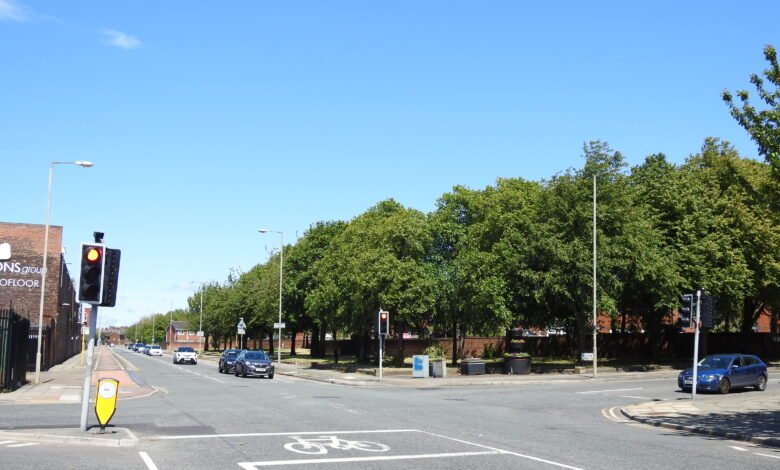
A major £12m project to improve safety and accessibility on one of Liverpool’s key routes is expected to be approved by Liverpool City Council next week.
A report going before Cabinet will recommend appointing a contractor to deliver a series of upgrades along more than 2km of Vauxhall Road and Commercial Road.
The scheme will include a fully segregated cycle lane, improved footpaths and new pedestrian crossings at busy junctions, including Leeds Street, Burlington Street, Boundary Street and Sandhills Lane.
The carriageway will also be resurfaced as part of the works, helping to create smoother journeys for drivers, cyclists and other road users.
The council says the project is designed to make journeys safer and more reliable for people walking, wheeling and cycling, while improving the overall layout of the route for everyone who uses it.
A key aim of the scheme is to improve road safety and help reduce the number of collisions along Vauxhall Road and Commercial Road.
Initial proposals were shared with residents in September 2024, with 81 per cent of respondents supporting the plans.
Following that consultation, the designs have now been refined and are ready to move forward, subject to Cabinet approval.
The project forms part of the Liverpool City Region Combined Authority’s Local Cycling and Walking Infrastructure Plan, which is developing a network of high-quality active travel routes across the region.
Funding will come in part from Active Travel England.
If the scheme is approved, work is expected to begin this autumn.
Councillor Dan Barrington, Cabinet Member for Transport and Connectivity said:
“These works will create accessible, high‑quality routes for everyone who travels through this part of the city.
“By giving people safe, dedicated space for walking, wheeling and cycling, we’re making it easier for residents to choose active travel when it suits them.
“And for those who continue to travel by car, better‑designed junctions, clearer crossings and fully segregated cycle lanes mean safer, more predictable journeys for all road users.”